A Walk Between the Lines
A participatory spatial experience translating eco-poetry into illustration, typography, and place-based encounters at the University of Florida’s Field & Fork Farm. Developed as part of my thesis research, the project invited visitors to move through the farm, encountering five poems through illustrations, text, and the surrounding landscape. Please see my thesis document in my About page to read research further.
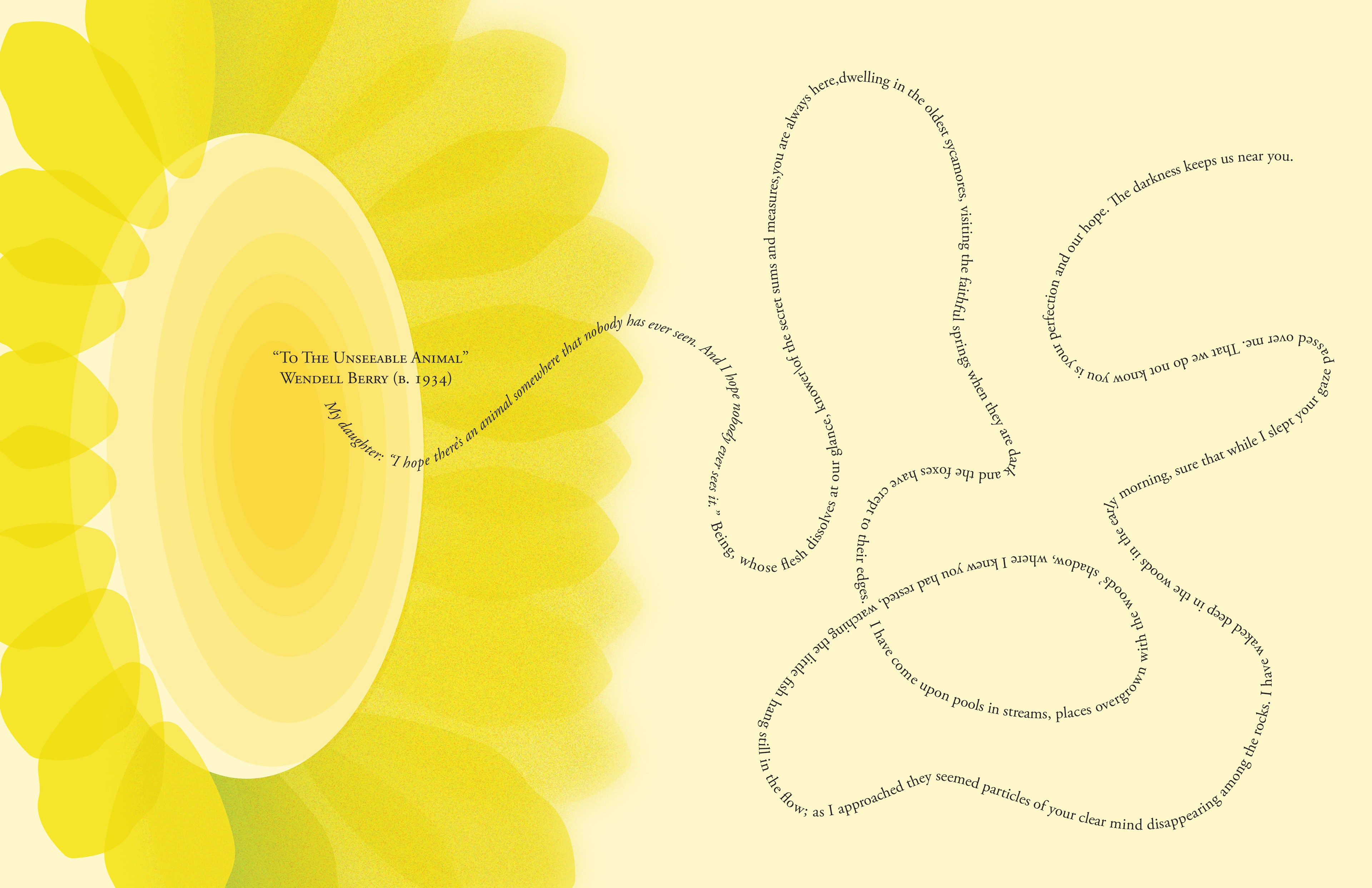
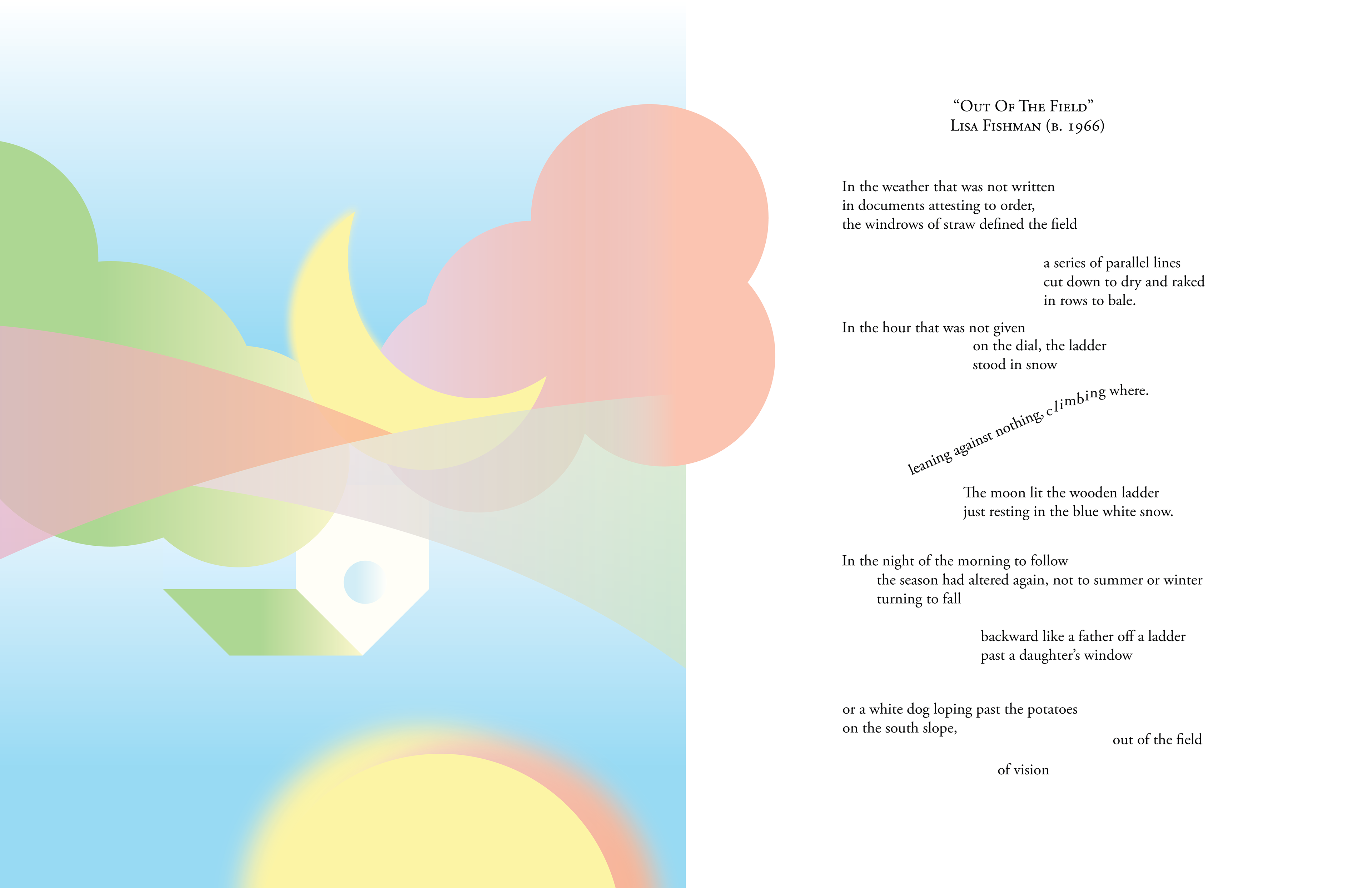
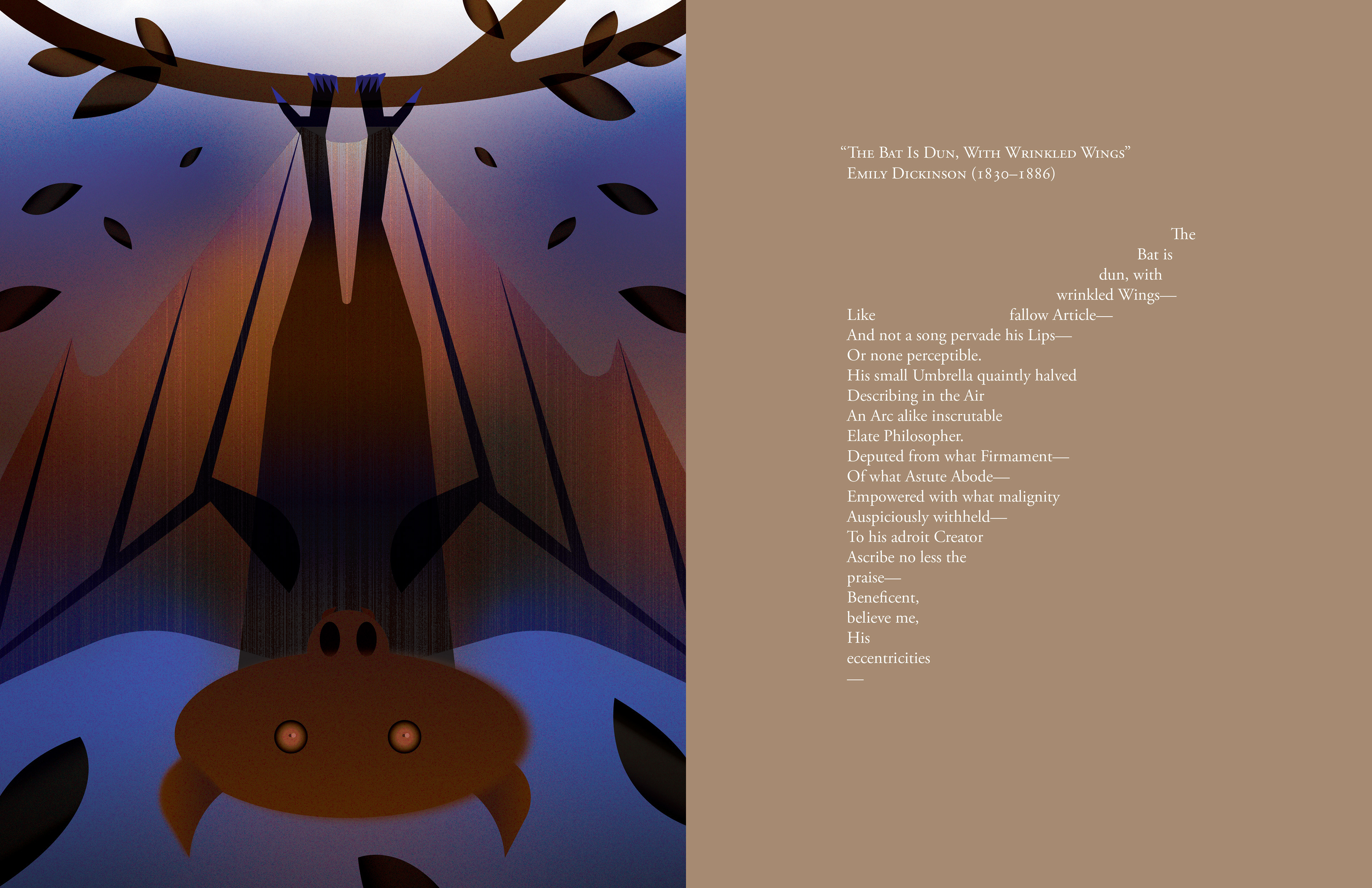
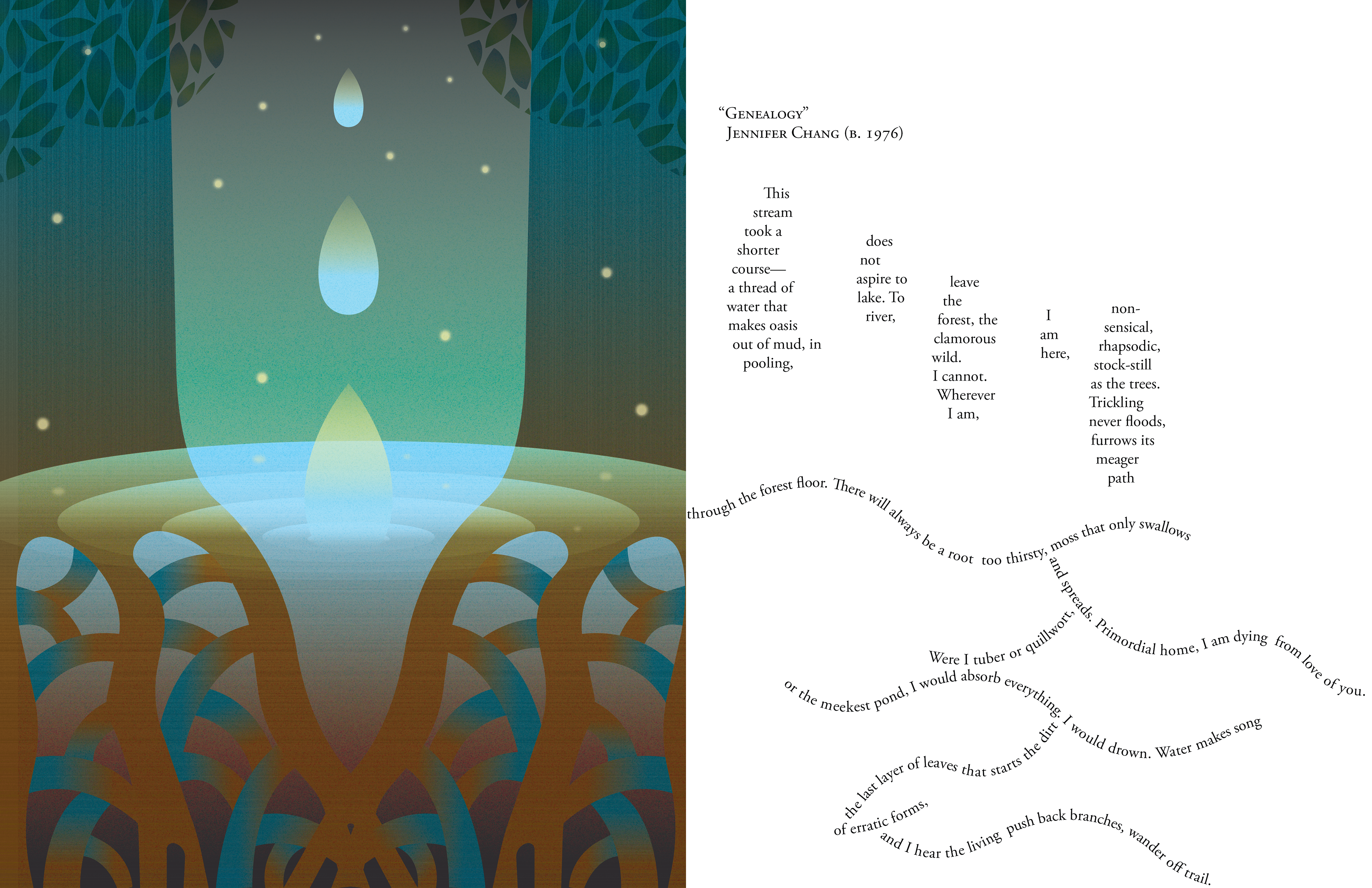
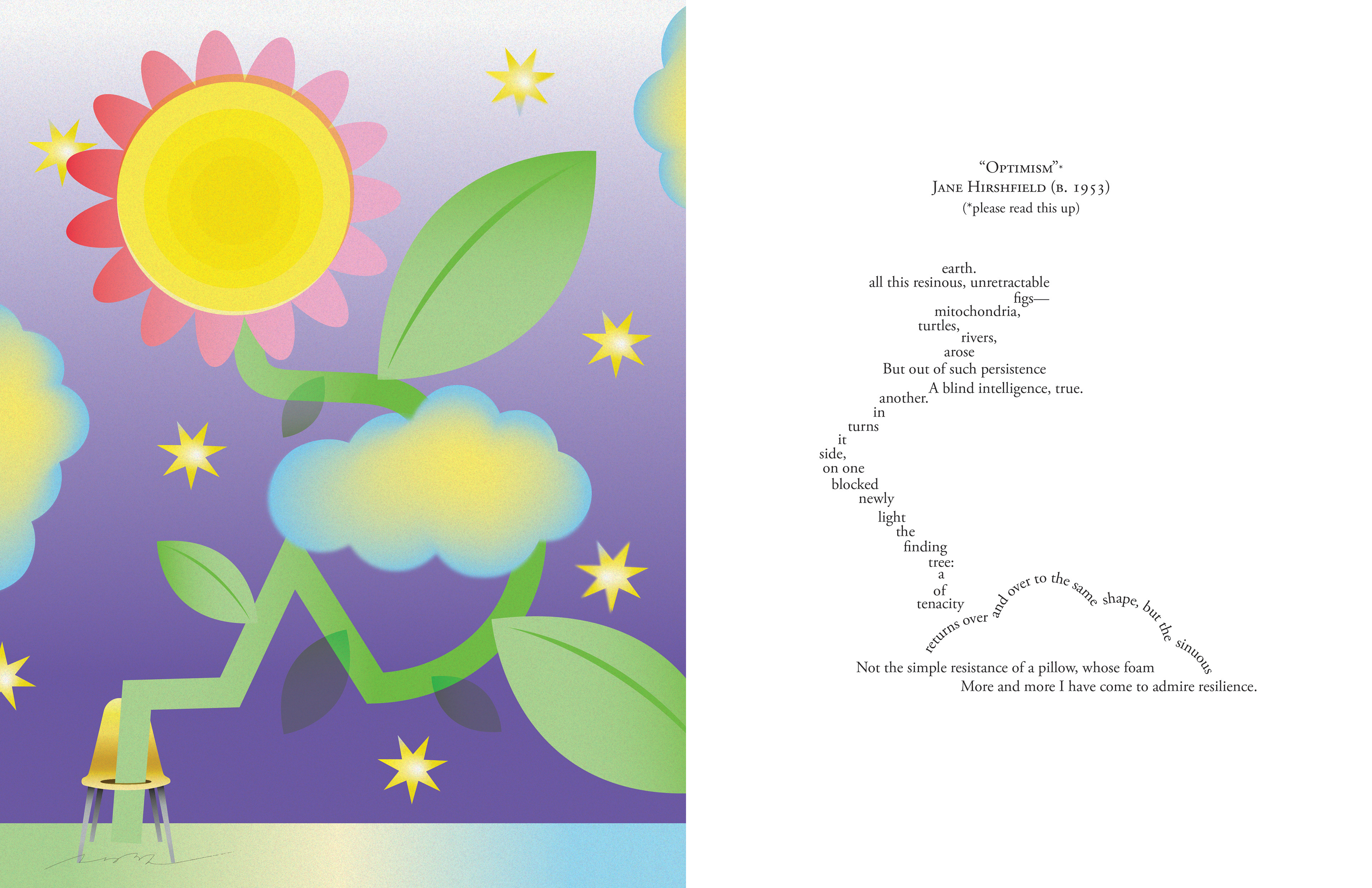
The project began with Poetry in the Gardens, an initiative of the Imagining Climate Change program at Field & Fork Farm. A collection of poems, selected through a University of Florida eco-poetry course, had been placed throughout the farm in relation to specific landscapes. I selected five poems based on their locations and my own resonance with the texts, then translated each into an original illustration and typographic composition, considering how visual interpretation could create another entry point into the poem and its ecological context.
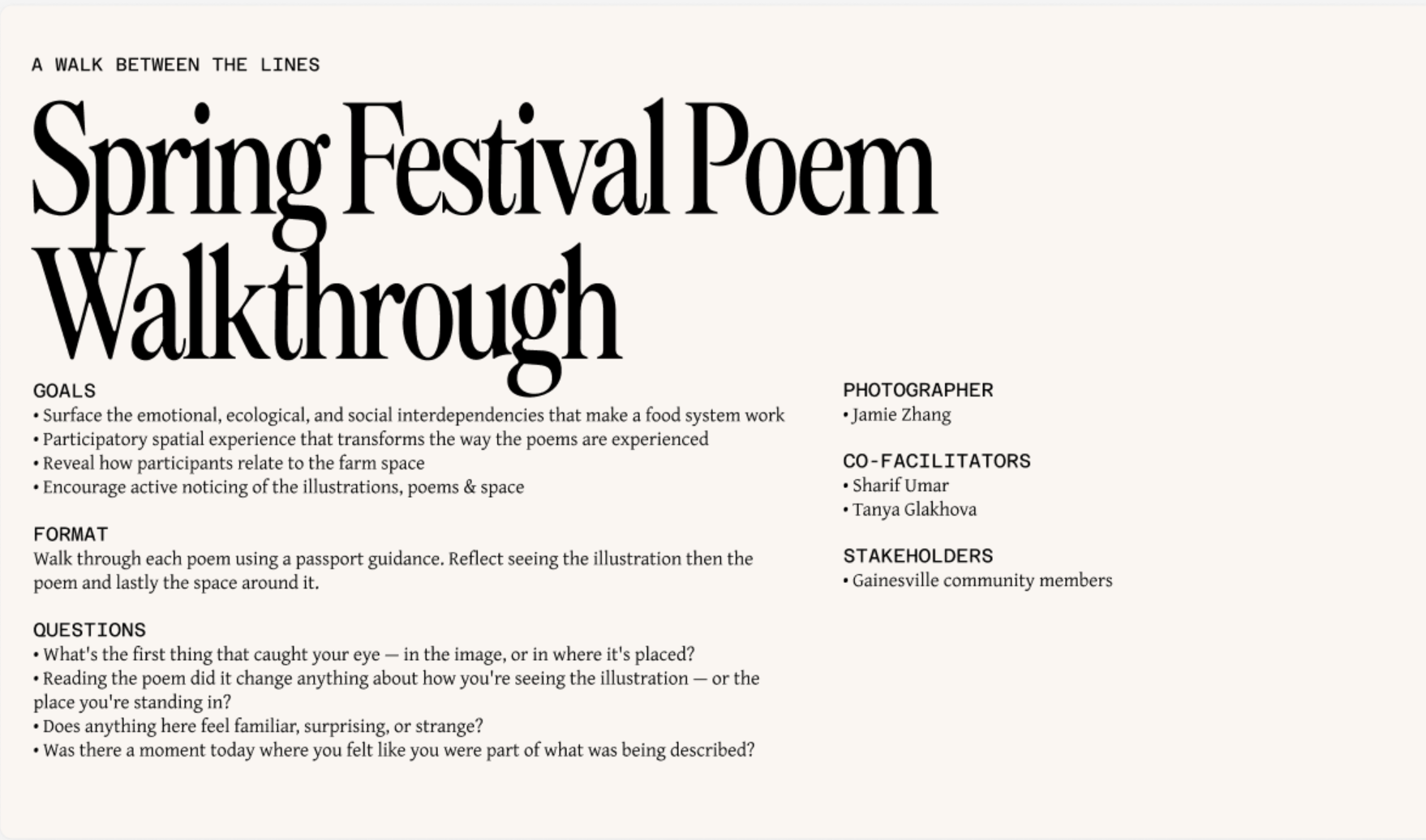
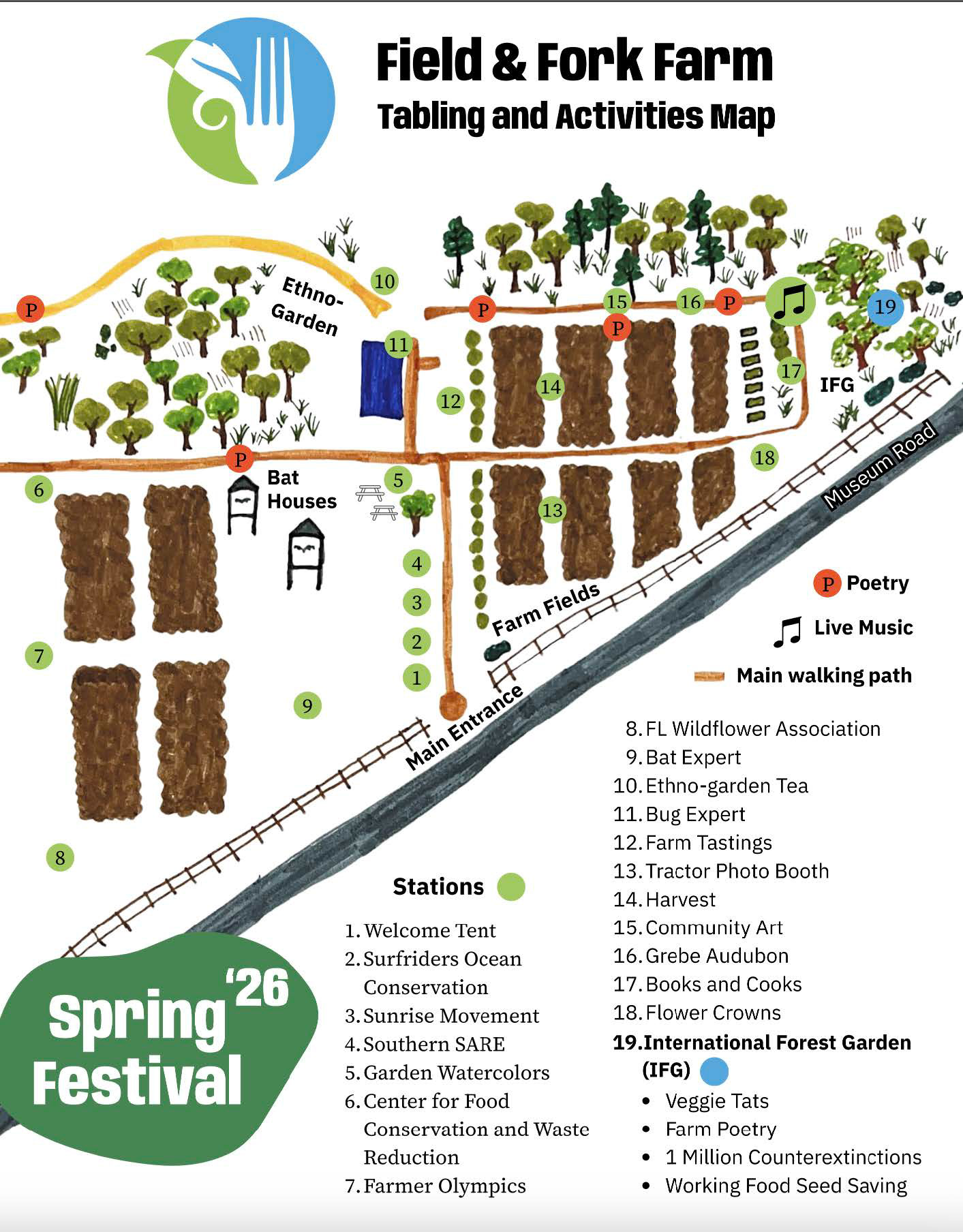
These illustrations became the foundation for A Walk Between the Lines, a passport-style experience developed for the farm’s Spring Festival. Visitors moved between five stations, encountering each illustration first, then the poem, and finally the surrounding environment. Prompts encouraged participants to notice what changed between these encounters, reflect on personal connections, and consider how they related to the farm as they moved through it.
The project explores how illustration, poetry, and place can work together to make ecological relationships more tangible. Rather than presenting environmental information as something to simply observe or understand, the experience invited participants to slow down, look closely, and find their own points of connection within the landscape.
Inspirations include Simms Taback’s expressive approach to children’s poetry books, as well as the existing Poetry in the Gardens installations at Field & Fork Farm.
Acknowledgement: This project was developed under the guidance of Eury Kim, my Thesis Chair and Assistant Professor at the University of Florida as well as my committee members Seojoo Han, Assistant Professor, Director of Graduate Studies & Margaret Portillo, Ph.D., FIDEC, Professor of Interior Design. Also, I will like to thank my professors Maria Rogal, Dori Griffin and Frederick Van Amstel who's classes and teaching practices were also influential to prepare for my thesis.
Seasonal interconnections · Tangible Systems · Food Interdependence · Research
The Five Poems — Link to the making of the poems
Designing the Passport — Inspiration & Material
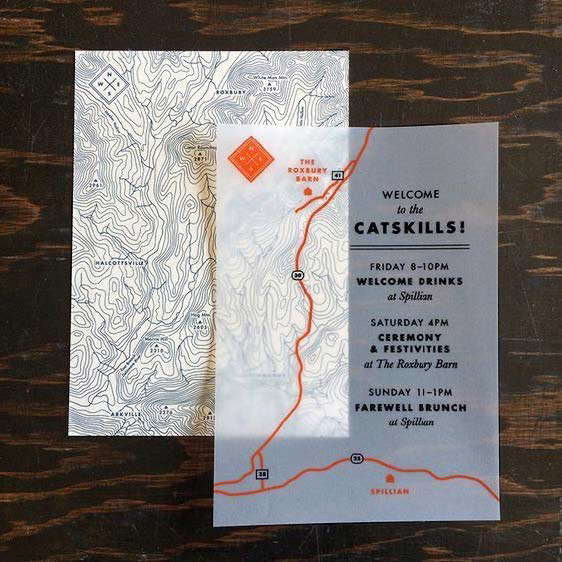
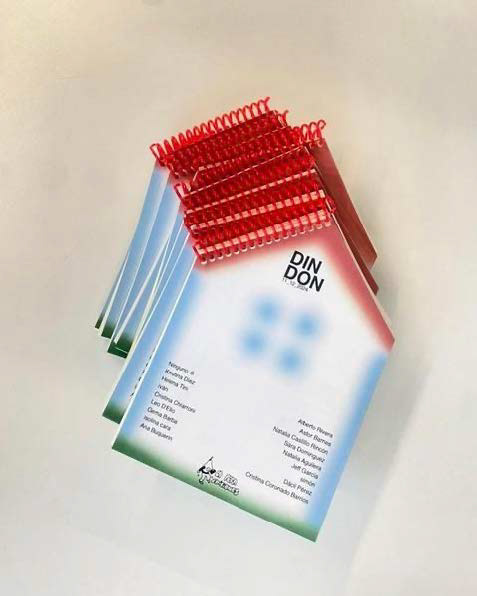
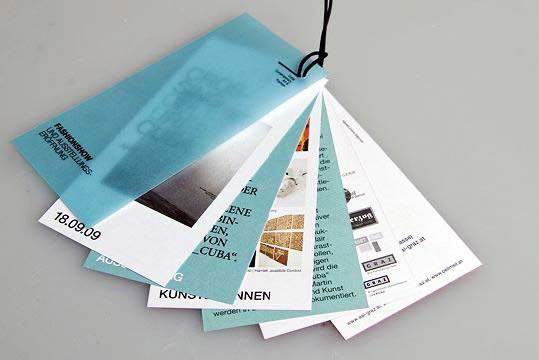
These visual references informed the passport’s material direction. Their use of layering, transparency, and playful vision guided the creation of an interactive format to support the participants experience.
This project was inspired by a range of printed and visual works, including a wedding invitation by Park Slope Press, a New York boutique design and print studio; Din don! (Winter 2025) by La Pera Ediciones, a Mexican creative studio specializing in small-scale handmade productions; a tag design by Moodley Brand Identity, an Austrian design and strategy agency; and the 2026 Field & Fork Spring Festival poster designed by intern Viviana Baker.
Process — Inspiration & Sketches
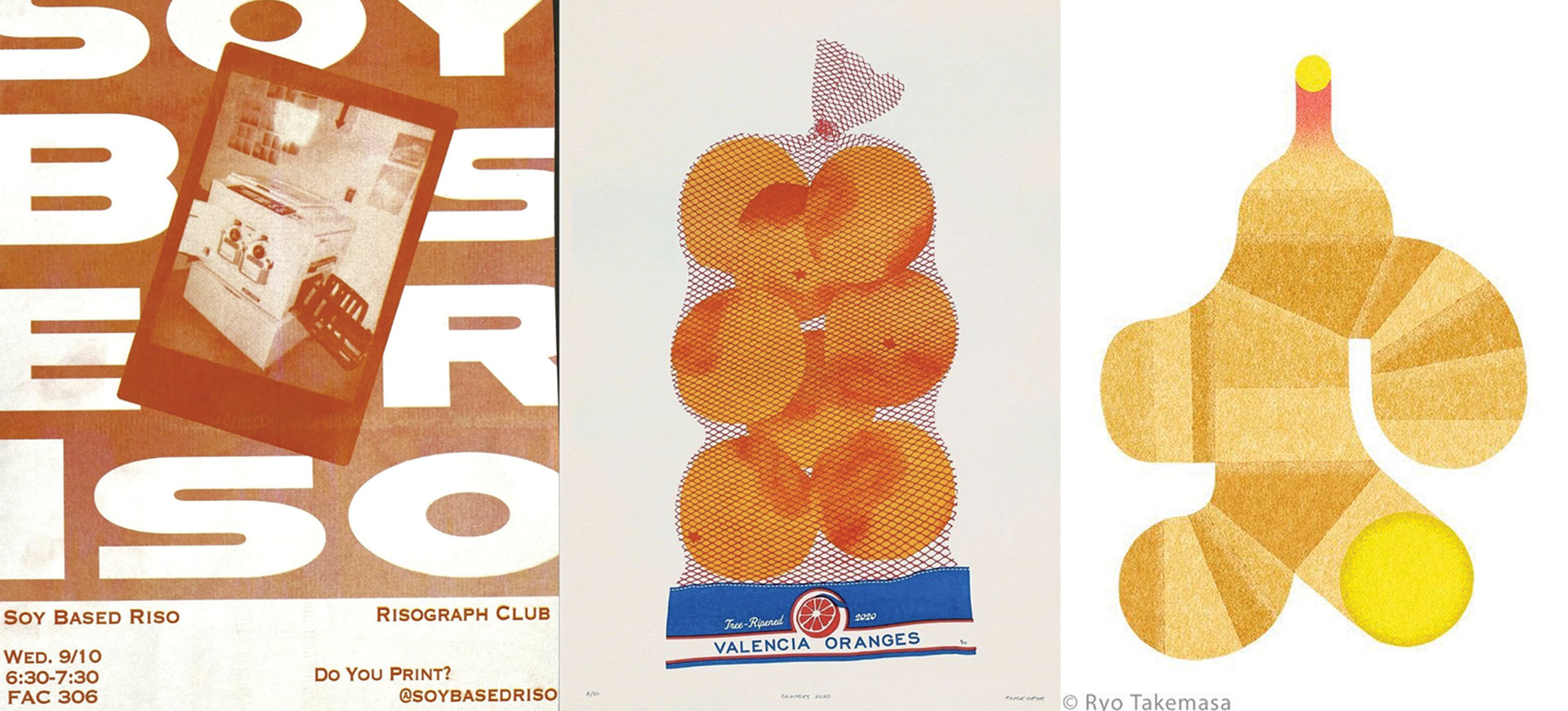
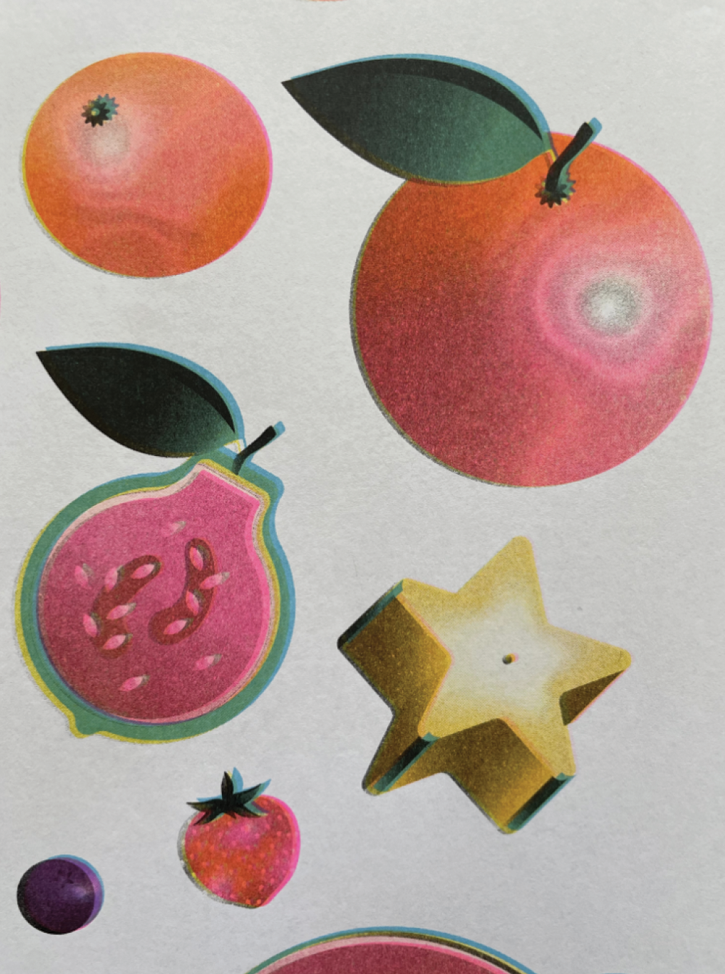
Becoming aware of the Risograph club at UF while teaching as a graduate assistant sparked an interest in exploring the process myself. I was drawn to the way layers build on each other, leaving traces of how they were made. These handmade qualities supported the project’s conceptual focus on interdependence—emphasizing that food and environmental systems, like the printed surface itself, are layered, relational, and shaped by process rather than flat or neutral. As an illustrator, I turned to visual references, drawing inspiration from the colorful, playful compositions and tactile printed textures of Alice Oehr and Ryota Takemasa.
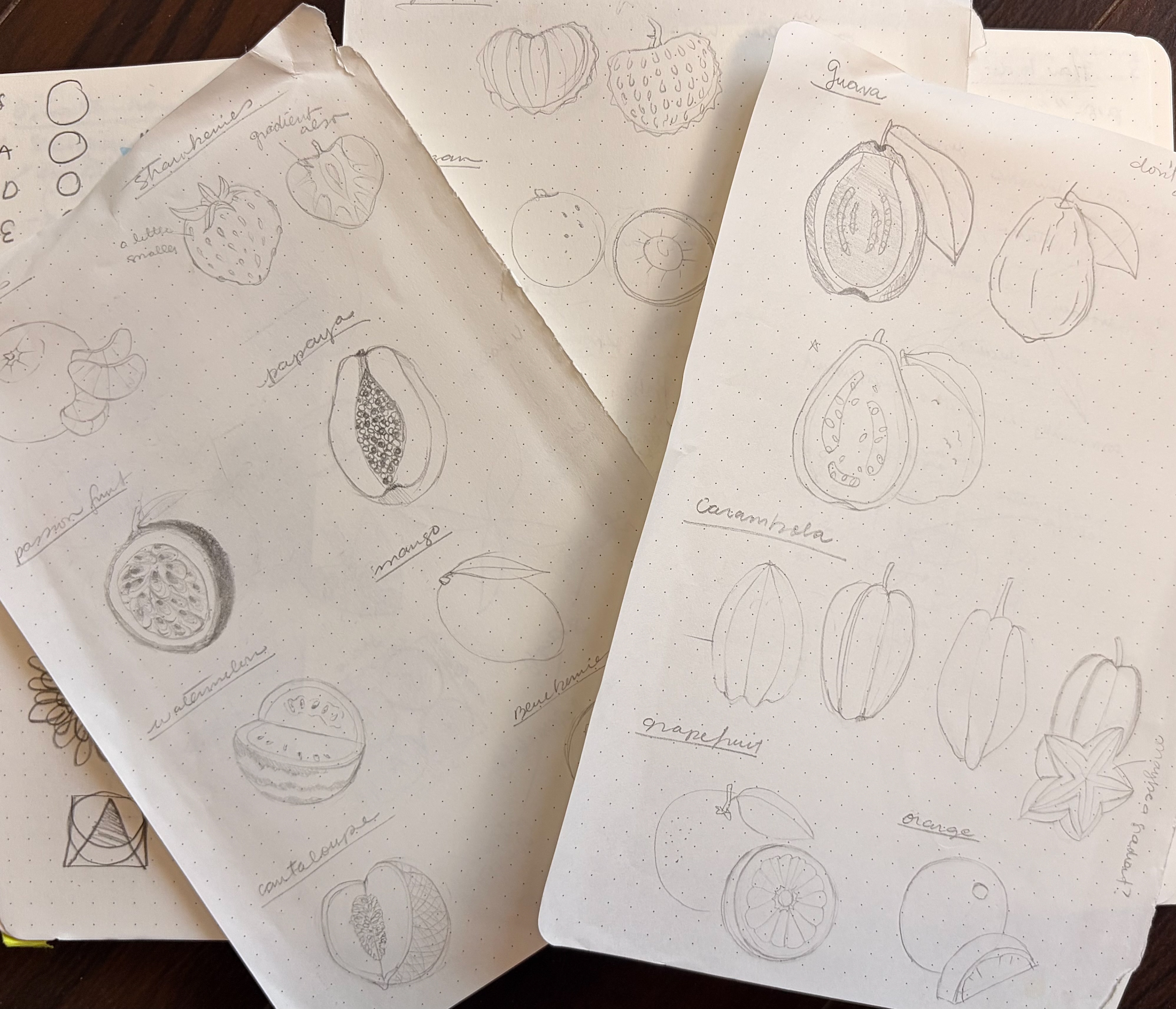
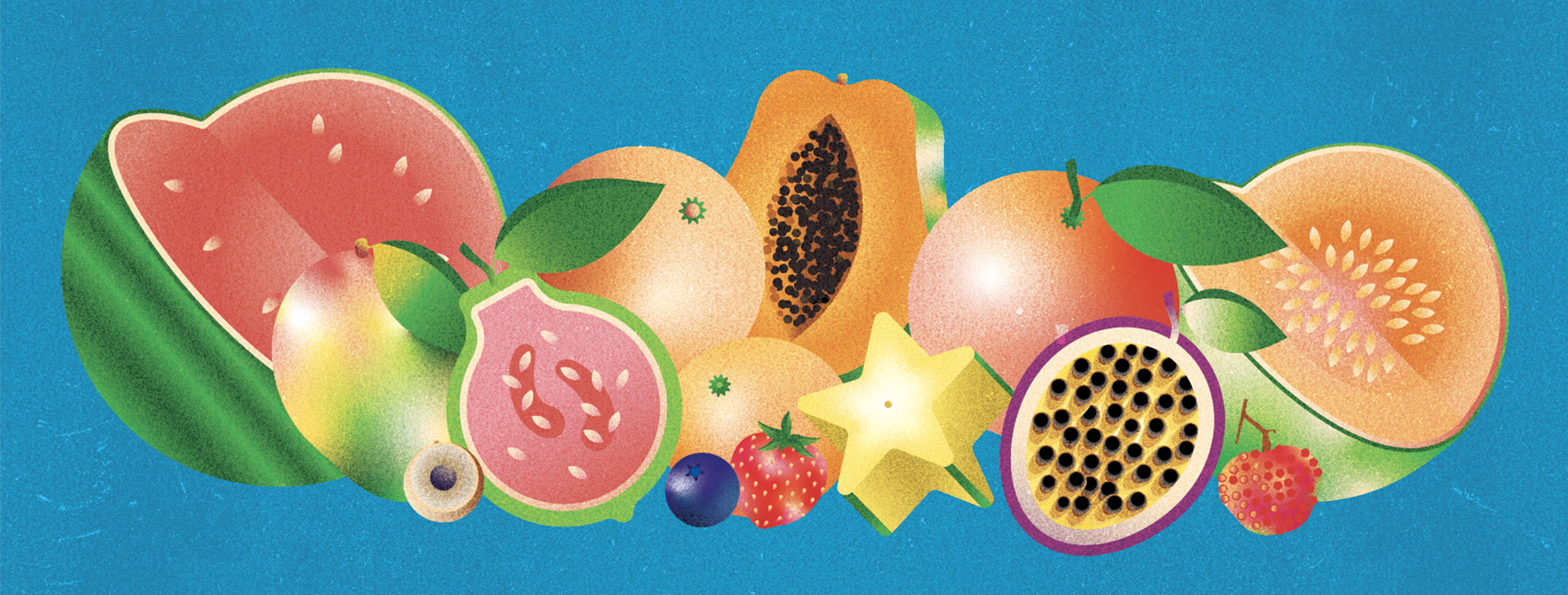
Final Digital Illustrations
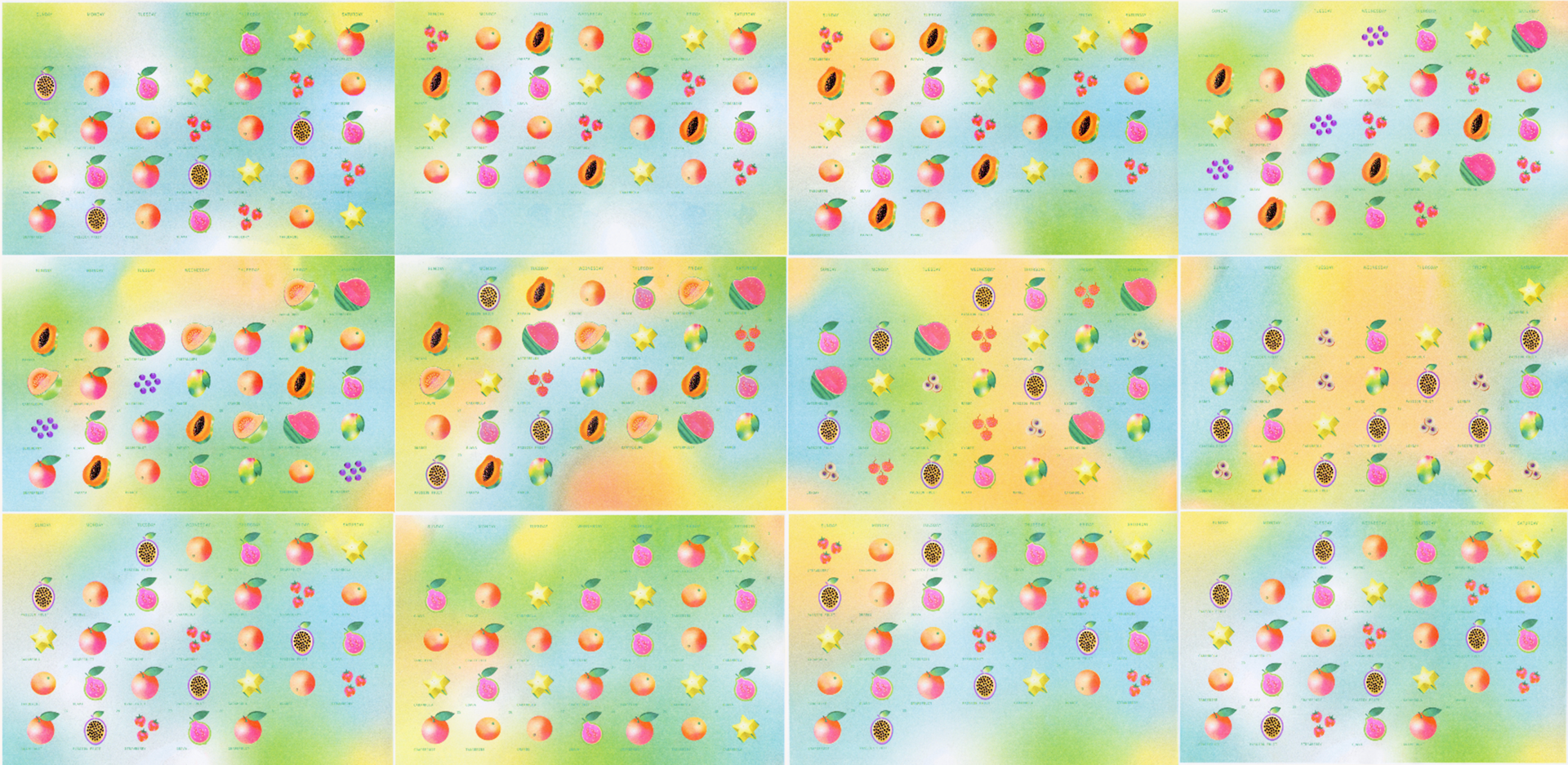
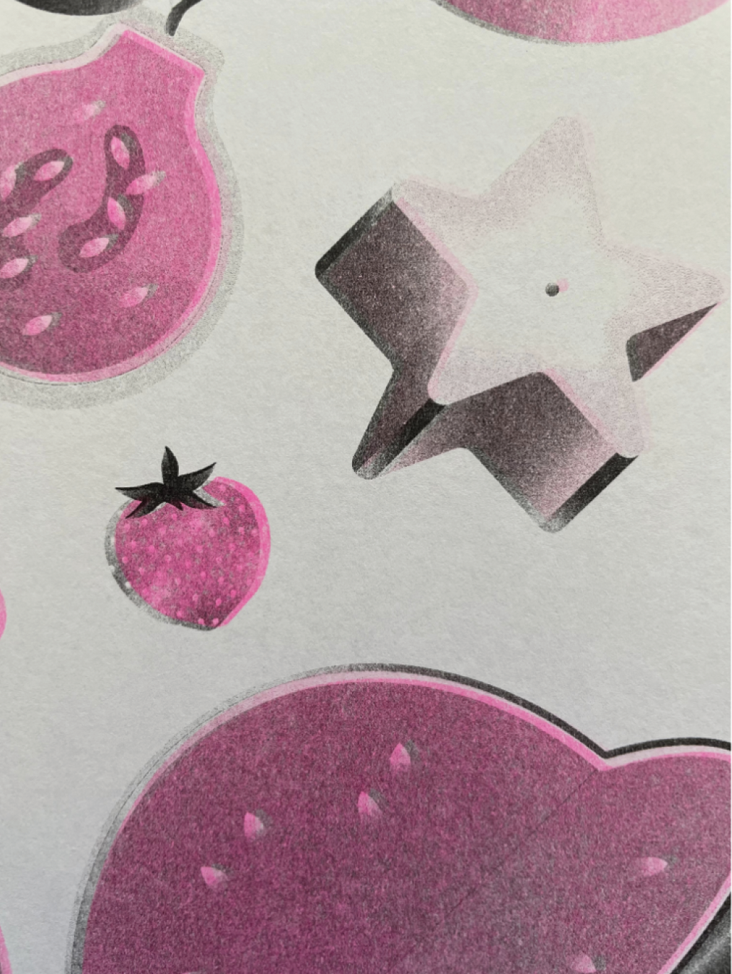
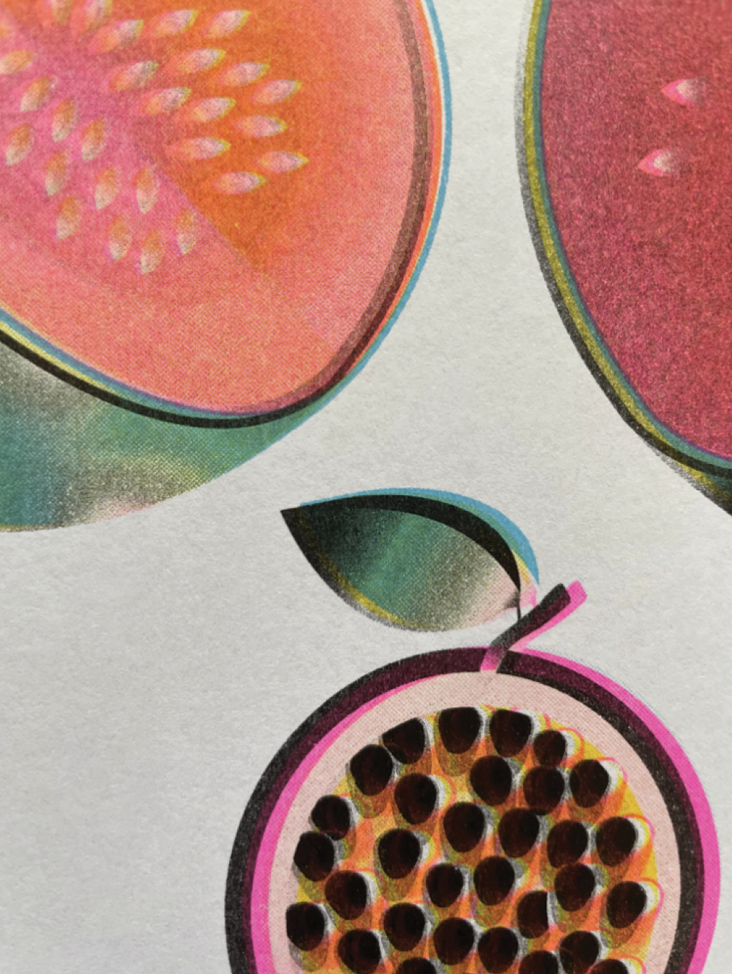
Process — Riso Print + 12 Months
Testing color layering—a four-color risograph process.
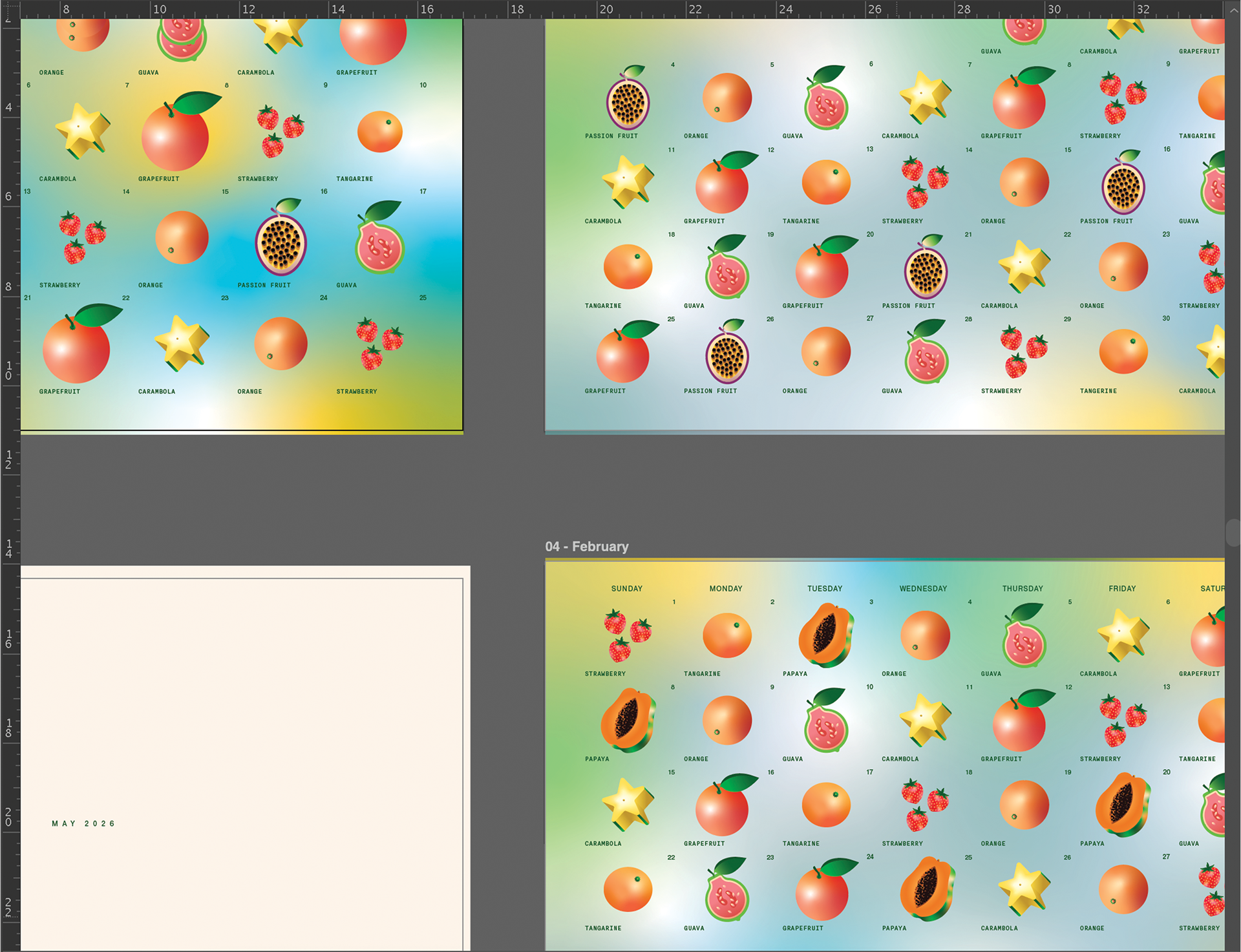
I developed the final design of the calendar, incorporating background elements that reflect the temperatures observed throughout each month as a final layer to strengthen the concept. This approach emphasized how food and environmental systems—like the printer surface itself—are layered, relational, and continuously shaped. Using this method, I produced prints for all twelve months.
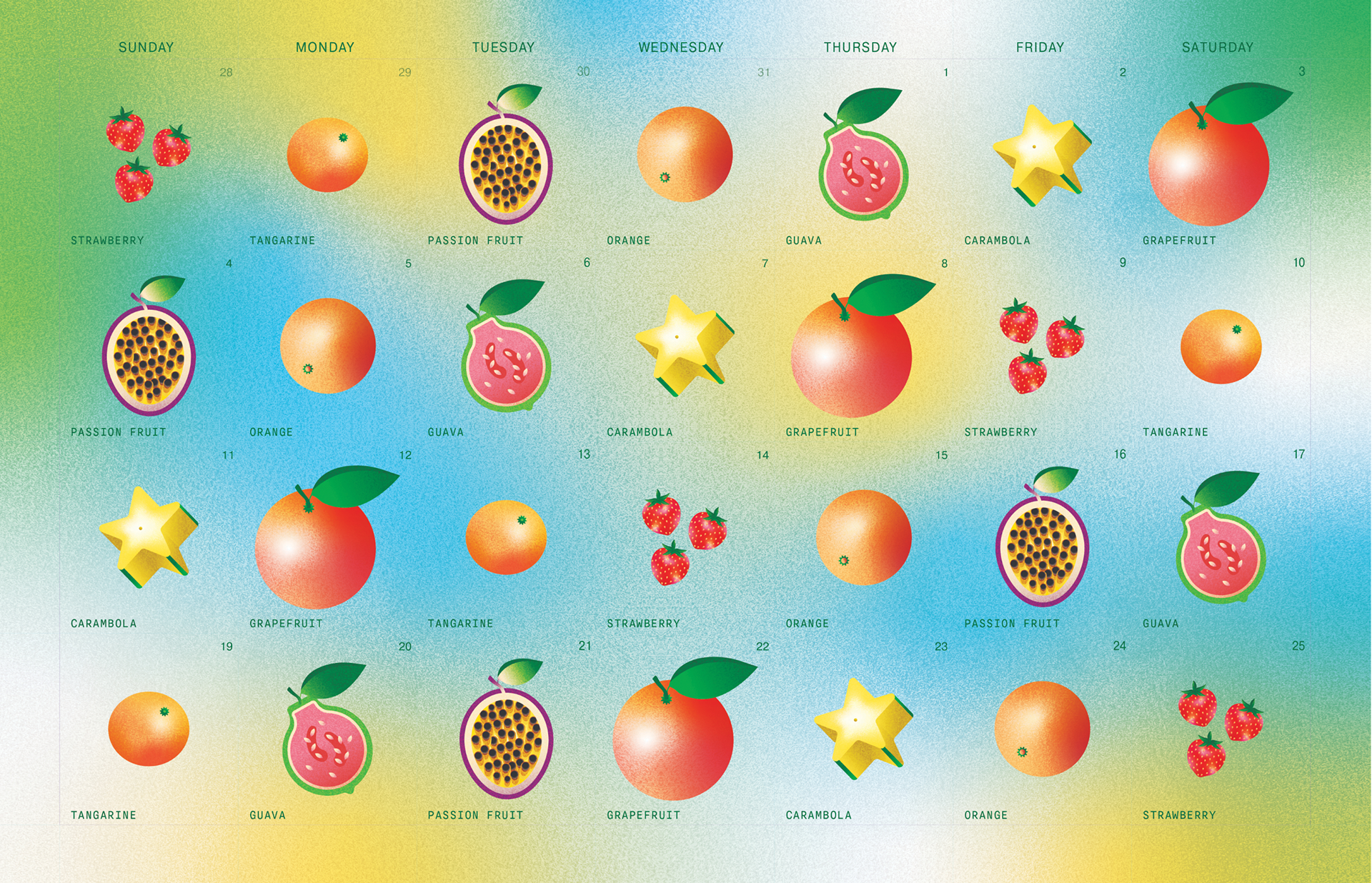
Final Risograph Prints — 12 Months January to December 2026