Kin Play —The Participatory Toolkit
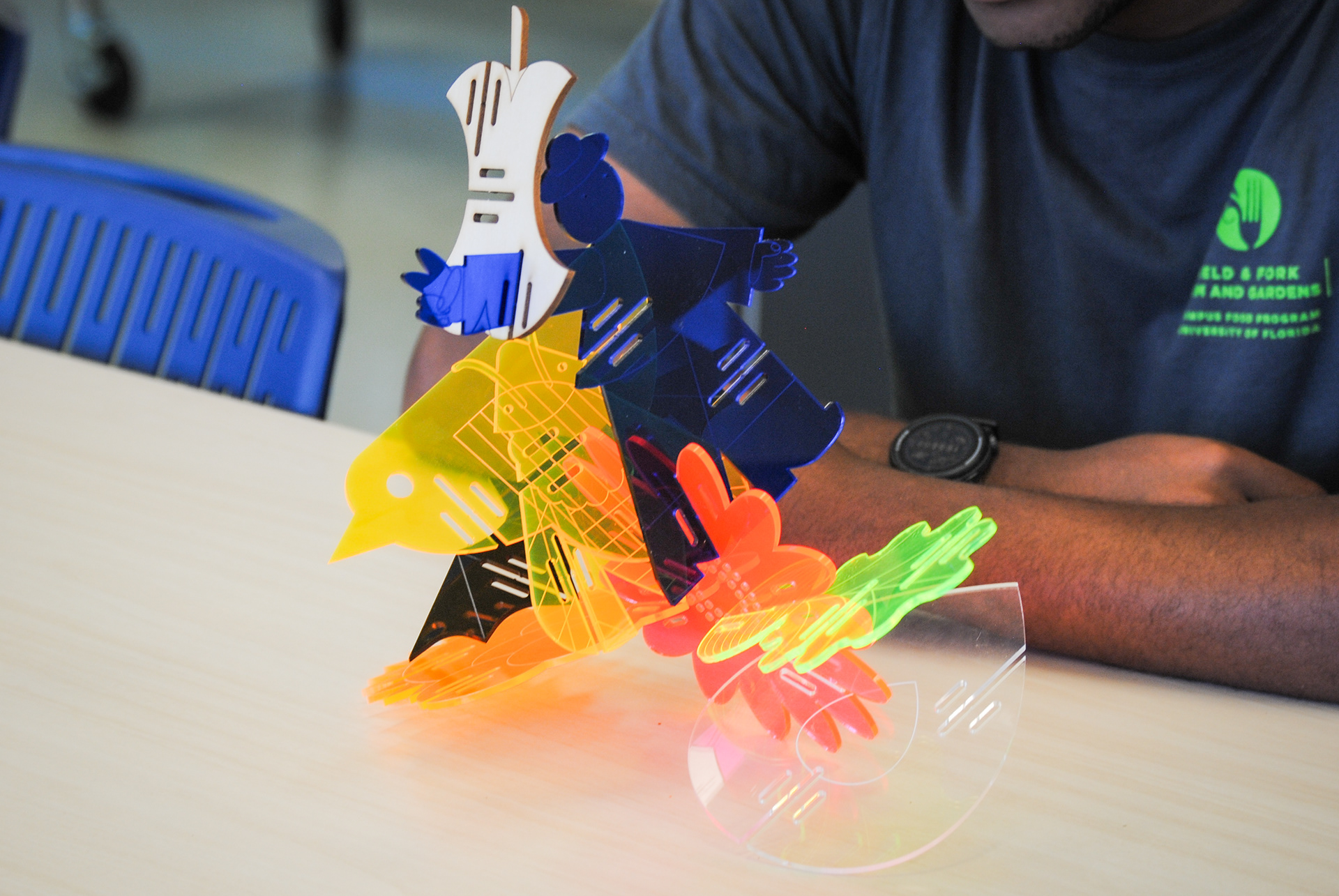
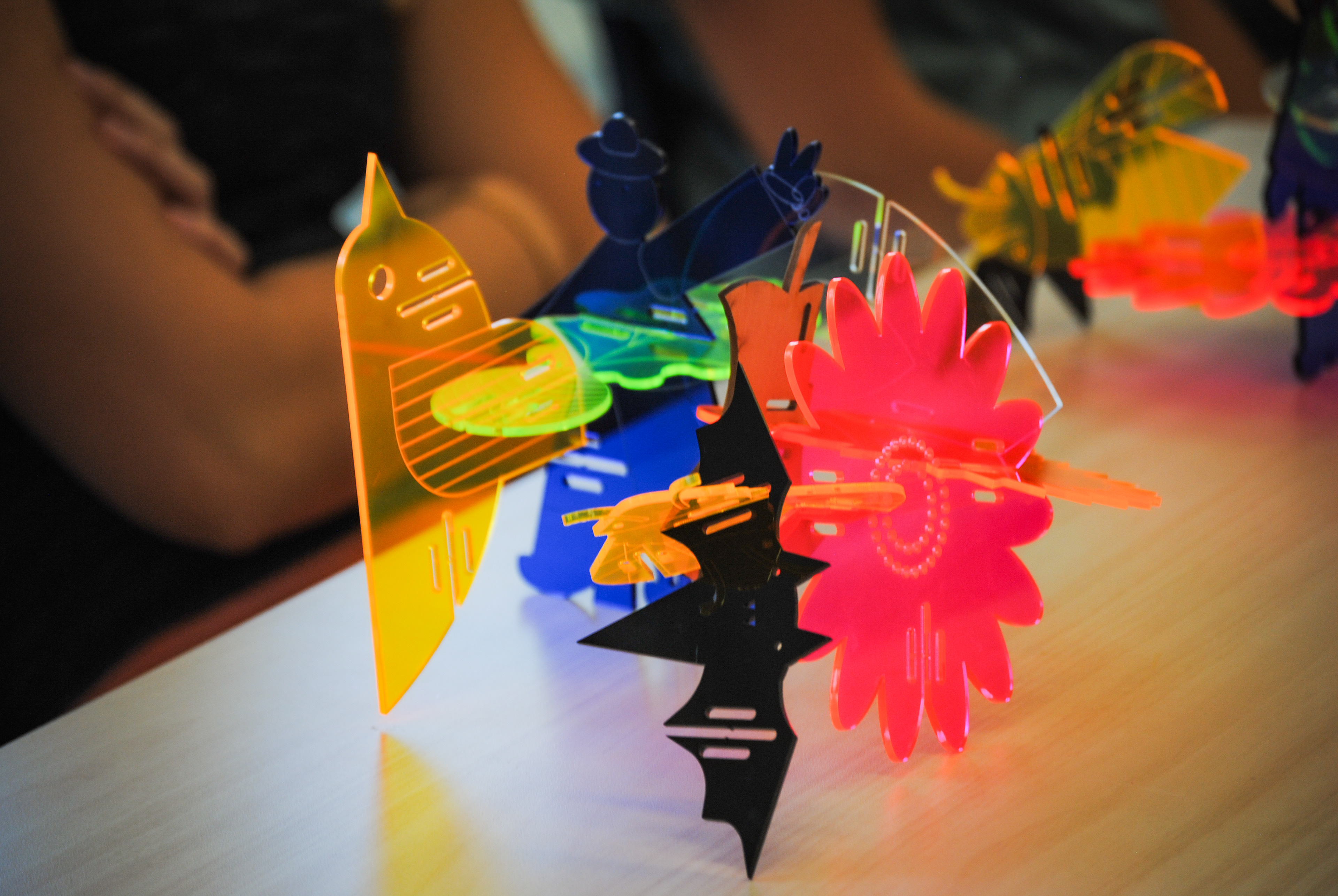
Kin Play is a participatory toolkit and facilitated workshop experience designed to help stakeholders physically map and reflect on the ecological interdependencies within food systems. Developed through workshops at Field and Fork Farm at the University of Florida, the project uses a set of abstract acrylic shapes, including a distinct wooden decomposer piece alongside forms representing water, pollinators, produce, weather, and human labor. Stakeholders assemble the pieces into relational compositions that express how ecological systems depend on one another. Please see my thesis document in my About page to read research further.
The project responds to the challenge of communicating food systems beyond charts, statistics, and abstract information. Instead, Kin Play uses tactile interaction, storytelling, and participatory design methodologies to encourage embodied understanding and collective reflection. Inspired by philosopher Donna Haraway’s concept of “making kin,” the toolkit invites stakeholders to engage with ecological relationships through play, interpretation, and dialogue. One complete toolkit set was left at the farm to support future workshops and ongoing community engagement.
The primary audience included farm interns, volunteers, agriculture students, and students interested in food systems and cooking. Success was measured through three facilitated workshops involving 26 stakeholders, where every individual incorporated all ecosystem elements into their compositions, demonstrating collective systems thinking and ecological interconnectedness.
Acknowledgement: This project was developed under the guidance of Eury Kim, my Thesis Chair and Assistant Professor at the University of Florida as well as my committee members Seojoo Han, Assistant Professor, Director of Graduate Studies & Margaret Portillo, Ph.D., FIDEC, Professor of Interior Design. Also, I will like to thank my professors Maria Rogal, Dori Griffin and Frederick Van Amstel who's classes and teaching practices were also influential to prepare for my thesis.
Seasonal interconnections · Tangible Systems · Food Interdependence · Research
Stakeholder Models — No Two are the Same
Process — Getting to Know Field & Fork
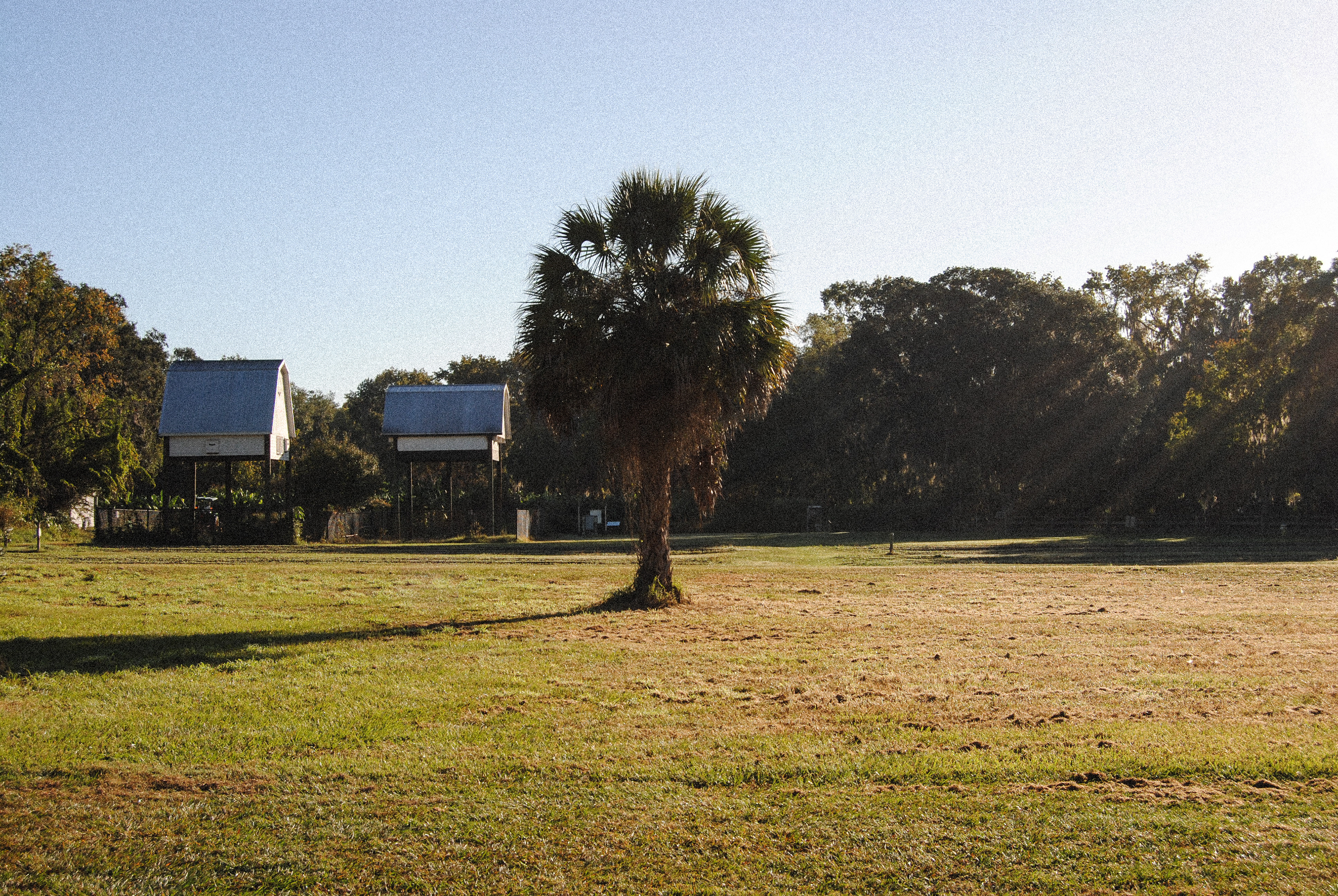
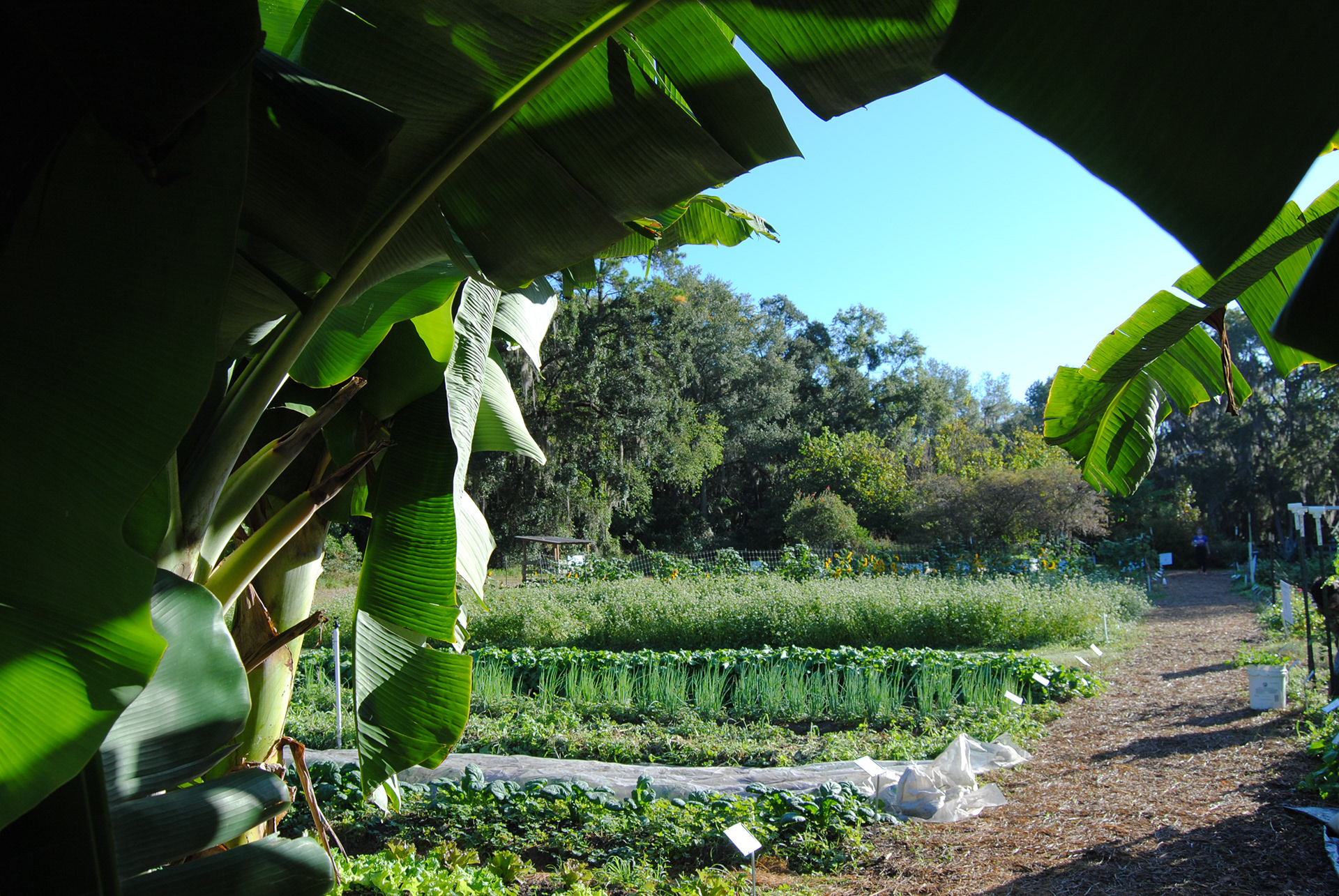
This project began through site visits to Field & Fork Farm, where I documented the space through observation, photography, and conversations with interns, volunteers, and staff. Spending time on the farm revealed an ecosystem shaped by interdependent relationships between crops, insects, animals, people, and the land itself. Elements such as bat houses, rotating crops, and even small moments like observing spiders at work highlighted the constant activity and interconnectedness present throughout the site.
Below the photographs you can find key quotes from the stakeholders. Throughout the interviews the words farming, sustainability, community and food were mention at least 22 times.
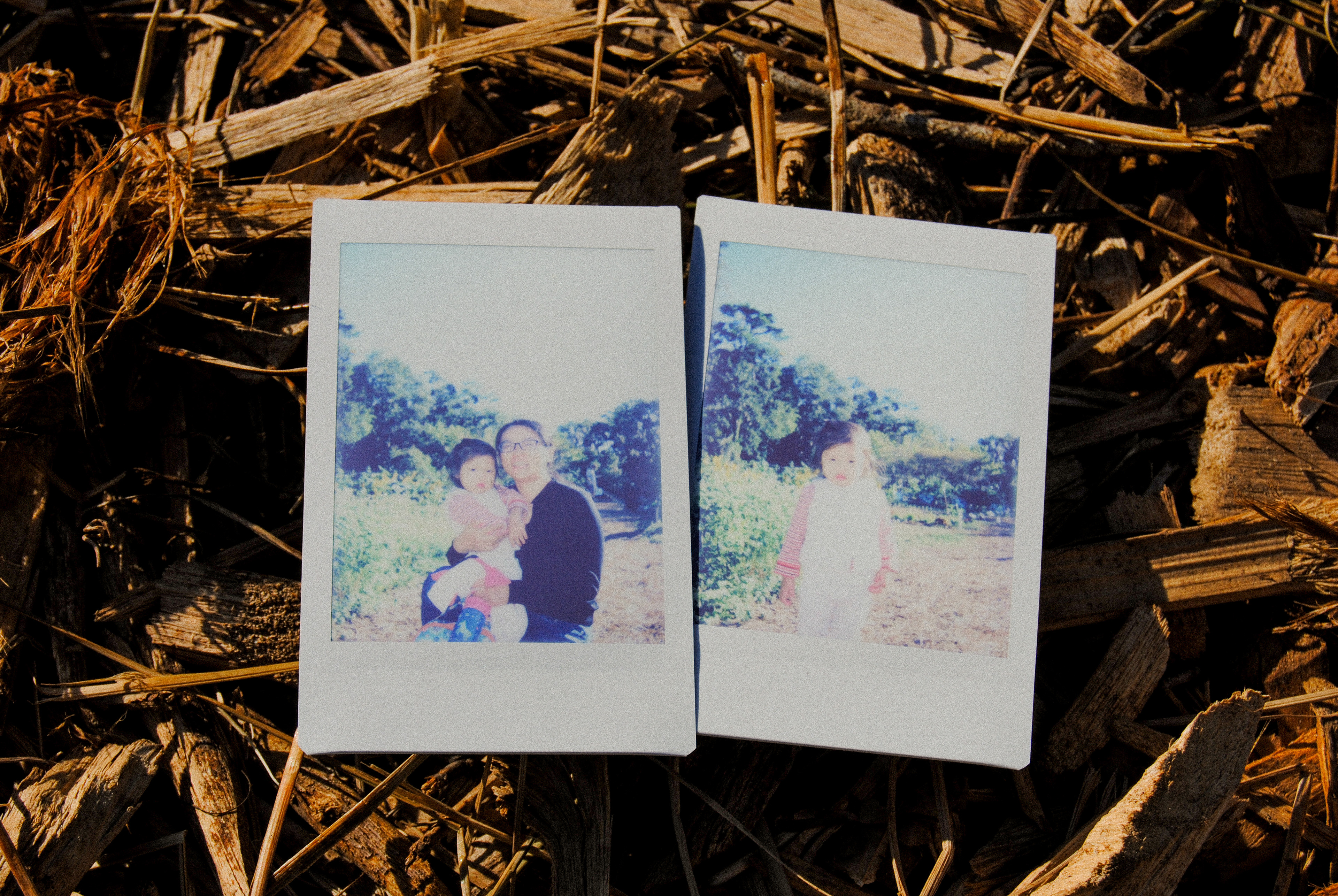
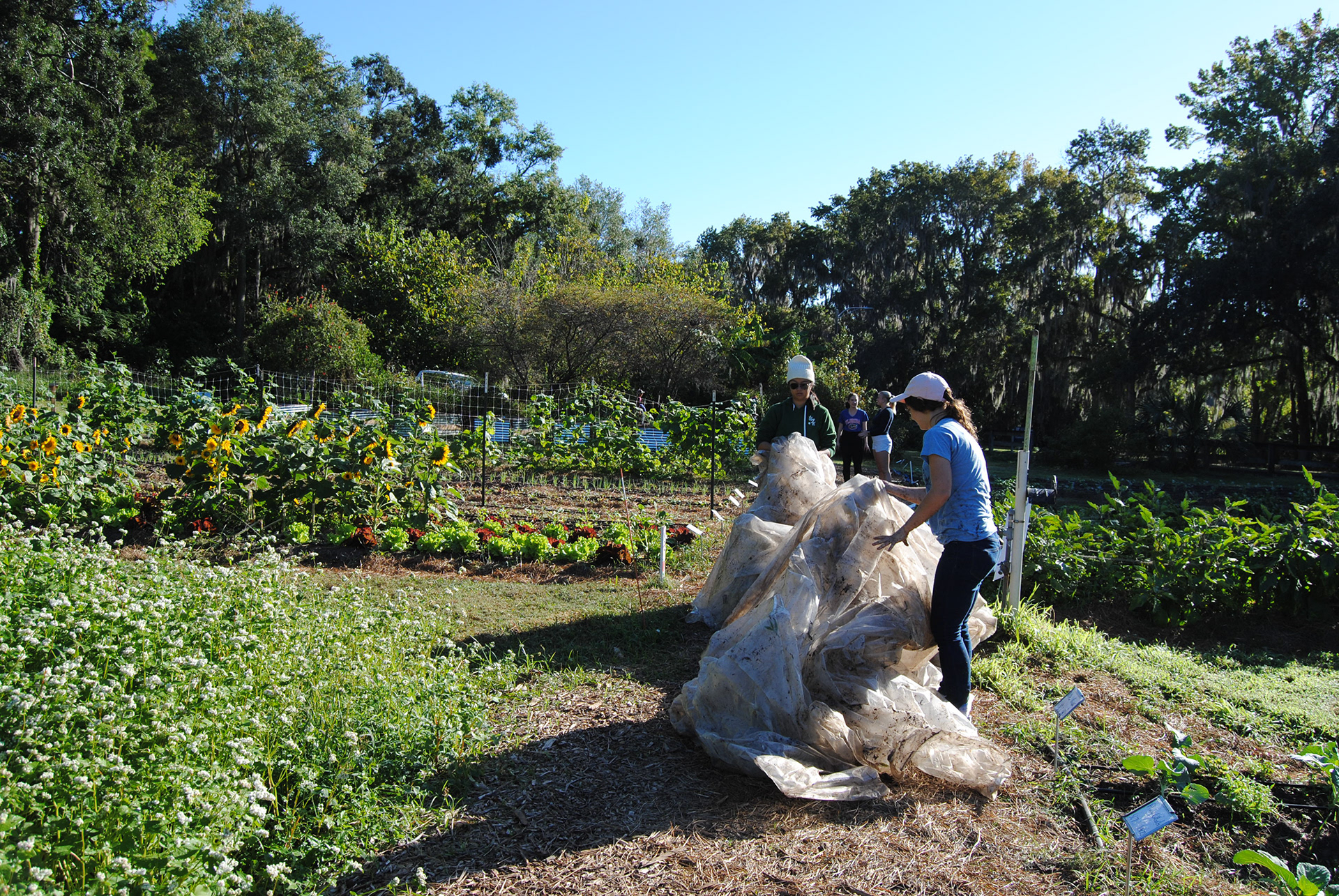
“We really treat the farm like an ecosystem… respecting the soil and then respecting the insects and respecting the nature that surrounds us.”
“Coming in, I think I knew like I had in class learned about a lot of the principles… but being here has made me more appreciative and mindful of food waste.”
“The story is that… there’s limited land, and she somehow was able to convince the head of UF to let them take this land and make it into an urban farm… people appreciate the work we do is important.”
Process — Inspiration & Material
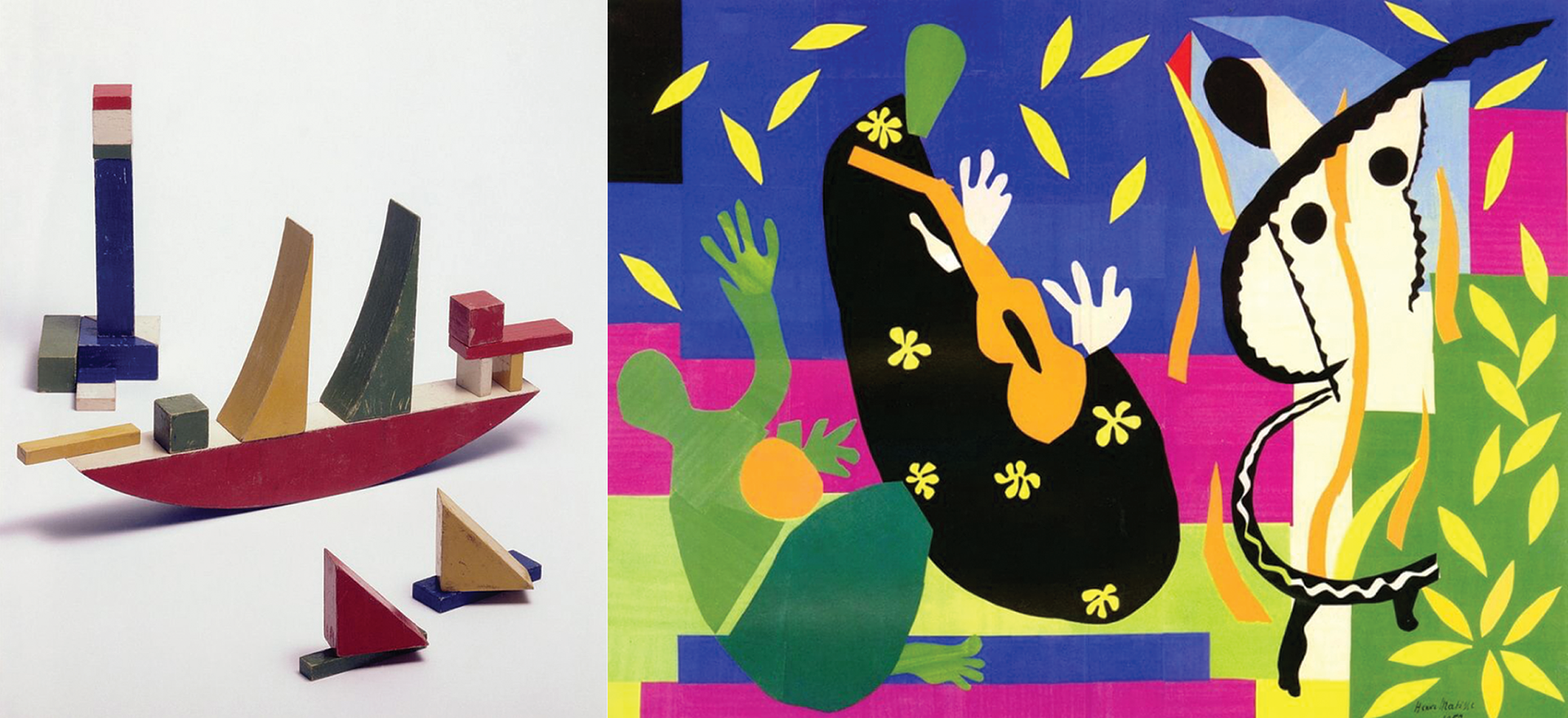
Kin Play is a participatory toolkit inspired by Donna Haraway and Robin Wall Kimmerer’s ideas of interconnected relationships between human and non-human worlds. The project encourages learning through making, interaction, and storytelling, drawing inspiration from LEGO Serious Play and modular construction toys such as Alma Siedhoff-Buscher’s Ship-Building Game (1923).
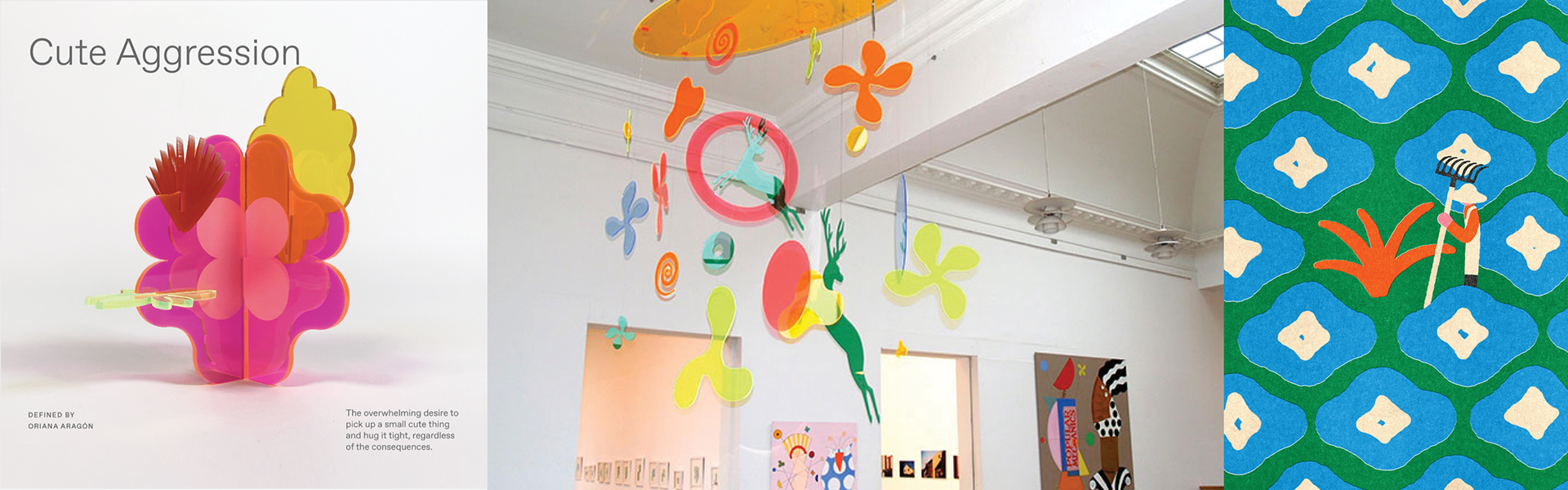
The toolkit’s visual language was influenced by the cut-out works of Henri Matisse, alongside contemporary artists and designers such as Akshita Chandra, Karin Olesen and Oyow. Together, these references shaped an abstract and playful aesthetic that invites interpretation, curiosity, and collaborative engagement.
Material Exploration
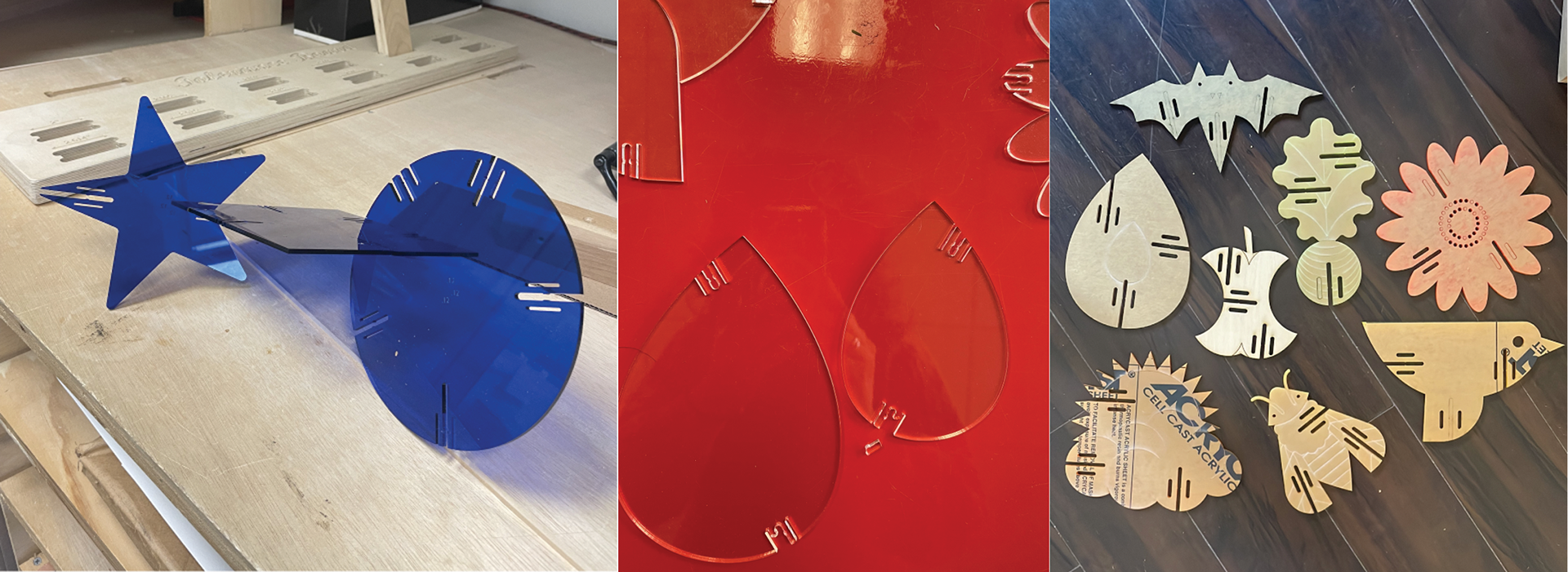
The development of the acrylic toolkit involved an iterative process of testing how shapes could interlock and function as a cohesive system. Early experiments explored basic forms, proportions, and joint connections to ensure the pieces were both durable and easy to assemble. As the illustrated shapes evolved, several prototypes failed—particularly when smaller tabs became too fragile under pressure—leading to adjustments that balanced structural stability with visual clarity. Through this process, a final set of nine open-ended shapes was developed, each loosely inspired by ecological relationships within the farm while remaining flexible for participant interpretation. Multiple scales were also tested through larger and smaller sets of pieces, allowing participants to engage with the toolkit through different levels of tactile interaction and collaborative play.
Roll Up your Sleeves
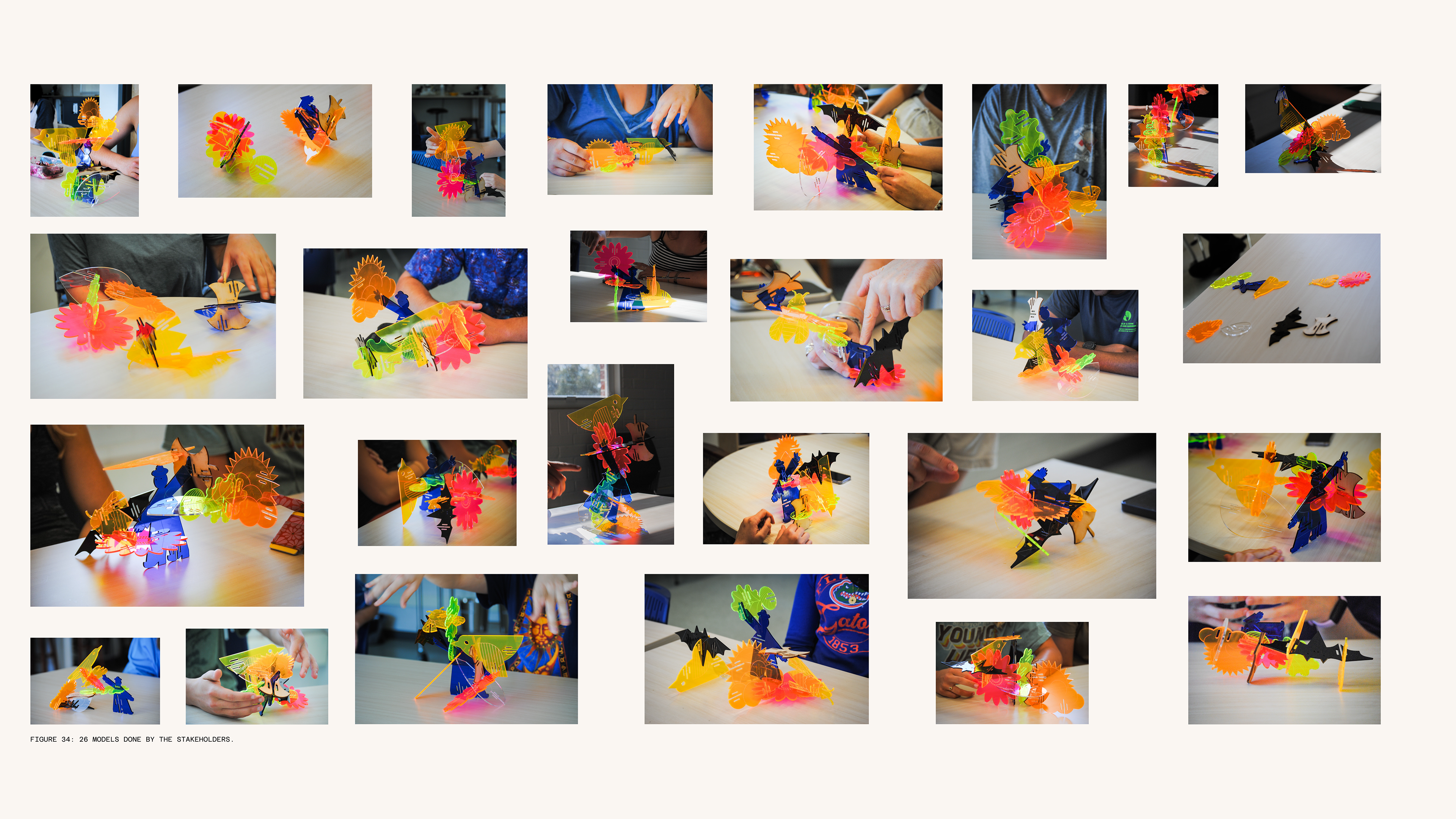
Although participants were told they could use only the pieces they found relevant, every one of the 26 individuals, between the three sessions, chose to incorporate all of them. This decision was not prompted, yet it was consistent. Participants did not isolate parts of the system; instead, they instinctively accounted for the whole, suggesting an underlying inclination toward completeness when thinking about ecological networks.
Taken together, these sessions point toward a clear conclusion: the Making Kin toolkit creates conditions in which participants feel ecological interdependence rather than simply describe it. The limitations identified are not failures, but signals—indications of what is missing, what needs support, and what could be expanded.
Below the image you can find key quotes from the stakeholders.
“Where in Florida, we have two growing seasons...and seeing the water specifically, and seeing the sunlight specifically. Because in my mind, I'm like... it's up there. It's not something that's special to the farm, but it is special to the farm. It's incredibly integral to what we do.”
“I feel like it made me think outside the box because I just kind of looked at this from an agriculture perspective, like putting the game perspective into it.”
"Water is definitely essential to all these things, and therefore water is also holding these pieces together."